Introduction
Artificial Intelligence (AI) is redefining the next phase of technology and has gained widespread attention among scholars, the tech industry, government agencies, and the general public. At the center of this year’s South by Southwest Conference (SXSW) was AI.
“Generative AI is everywhere at this point. There’s scarcely a significant part of the company (Amazon) that’s untouched by it,” The Vice President of Amazon’s Artificial General Intelligence Vishal Sharma said.
Michael Dell, Founder and CEO of Dell Technologies also said, “I think AI is going to empower creators just like it’s going to empower everyone else in our industry, but this might happen 10 times faster in almost no time. We have like 5 billion people with PCs and phones accessing AI.”
However, the conversation about AI doesn’t exist solely among tech giants and businesses; research institutes, digital media enthusiasts’ have also expressed their concerns about AI’s impact particularly on journalism. In Reuters’ 2023 report on AI and Journalism: What’s Next?, David Caswell discusses how AI, like ChatGPT is transforming the news industry. He highlights the significance of this shift for newsrooms and urges them to consider carefully how to deploy this new technology.
“Coming up with a list of things that your newsroom might be able to do using ChatGPT is fairly easy…It is much harder to clearly identify exactly what it is that you are trying to achieve with generative AI. This means it’s easy to think of quick ways to use AI, but the hard part is figuring out how it can really make a difference in the long run,” Caswell said in the report.
Now, considering the conversations around AI, how does the practical application of AI platforms, like ChatGPT and other visual or coding AI tools, showcase the broader impacts and challenges of AI integration into professional and creative fields? First, let’s look at ChatGPT.

ChatGPT
Developed by OpenAI and launched on Nov. 30, 2022, ChatGPT (Chat Generative Pre-Trained Transformer) is a text-based AI that can interestingly generate human-like responses to a wide array of prompt which has been described as understanding of natural language processing.
In the 2023 article “The AI Era of Computing is Still in Its Design Phase,” Diaz of Fast Company discusses how AI chatbots like ChatGPT is becoming increasingly adept at interpreting and responding to human language through its text prompts.
I personally found ChatGPT interesting when I used its Model 4 and inserted an image and instructed it to create a logo that reflects that image as closely as it could. It was able to generate a logo.
This experience was eye-opening as it made me realize that it doesn’t just interpret or respond to text but its advanced model can also understand the content of images to provide relevant creations and suggestions. Additionally, I used its Model 3, which managed to address all text-based questions I asked including but not limited to writing of news stories.
What it means is that, the ability of ChatGPT to read and write particularly news stories can save creators and journalists time. However, I realized that it isn’t perfect. Some of the responses are imaginative and require serious revision. Also, it uses certain computer language e.g., `delve’, ‘capitulated’, ‘underscores’, just to mention a few which runs through almost every lengthy inquiry and needs to be revised in the case of journalistic writing to resonate well with the targeted audience.
As discussed at the Broadcast Journalism Teaching Council’s summer conference by Paul Bradshaw, ChatGPT should be approached as an “unreliable narrator“. Thus, it’s a storyteller that prioritizes plausibility over truth, necessitating a critical approach to verification and fact-checking by the user.

Gemini
Formerly known as Bard, Gemini is AI tool developed by Google. It’s based on the same large language model (LLM) of OpenAI’s ChatGPT but varies in strength and weaknesses. It was launched in a limited capacity in March 2023 before expanding to other countries in May. This Google’s AI tool is able to generate text, translate languages, write different kinds of creative content, and answer questions in an informative way just like ChatGPT.
In Fast Company’s article on “The AI Era of Computing is Still in Its Design Phase,” Catherine Courage, Vice President of knowledge UX at Google talks about the capabilities and potential of Google’s generative AI chatbot.
“But the experiment is getting better: Now you can use it to search Gmail and Docs, asking the AI to find all itineraries of a trip to Europe from Gmail and put them together in a doc, for example,” Courage said. She further described how now you can upload an image of a bathroom to Bard and it can understand exactly what’s in there.
However, while ChatGPT is widely known and used by many, Gemini is not yet widely available to the public. Also I realized from my experience with the two AI tools that while ChatGPT’s free version has limitations on response length, Gemini don’t have limit on response length and web searches.
AI’s Strengths and Weaknesses
Considering the AI tools discussed above, it’s evident that, these chatbots can perform varied tasks, generate creative content, and process information at a scale and speed which is difficult by humans. Its application ranges from basic enquiry tasks like drafting emails to more complex creative endeavors such as writing news, music or generating artwork.
In 2023 Poynter article ‘Generative AI doesn’t require us to reimagine journalism, but it gives us a really good excuse’, Jeremy Gilbert, the Knight Chair for Digital Media Strategy at Northwestern University discusses both the strengths and weaknesses of AI in the context of journalism.
Talking about AI’s potential strength for journalism, Gilbert said “When we can use artificial intelligence in a way that helps reduce or eliminate that rote and mundane work — transcribing stories, maybe even doing some kinds of translations, doing tabulations, alerting people to changes in data — those are hugely valuable things.”
He also talked about AI’s potential strength in covering meetings more efficiently.
“If you have a transcript, or even video, of a city/county council-type meeting, we can use generative AI to do a much better job of transcription from the video. We can use different forms of AI, and we can understand what’s happening in that council meeting,” Gilbert said.
On the weakness of AI, Gilbert talked about its ability to create and increase misinformation.
“Generative AI is potentially a fantastic tool for people who are trying to create mis- and disinformation, and that’s a real problem. It can make, pretty easily, totally made-up claims look like the product of people with deep expertise.”
What this means is that AI has its setbacks and it’s not complete nor perfect. While it can be a great tool for journalist in their news creation and distribution, it demands human revision and expertise to make the best out of it.
This brings us to the question: Can AI Replace Humans?
The prospect of AI replacing humans has been a topic of considerable debate. While AI systems like ChatGPT, Gemini, DALL-E just to mention a few demonstrate remarkable capabilities in generating text and images, they also have serious limitations particularly in tasks requiring empathy, ethics, moral judgment, and deep contextual understanding. Therefore I am of the opinion that humans knowledge and understanding is irreplaceable regardless of any technological advancement.
Jeremy Gilbert’s discussion highlights the potential of AI to augment rather than replace humans. Due to its considerable amount of limitations which cannot be matched with humans, journalists can focus on the essence of storytelling, investigation, and analysis that these AI tools cannot replicate.
Looking Ahead
As we envision the future, it is evident that AI will continue to play a significant role in shaping the next era, much like social media did. It’s not going to stop. Tech giants and businesses of large scale and resources will keep up with the innovations of more advanced AI tools.
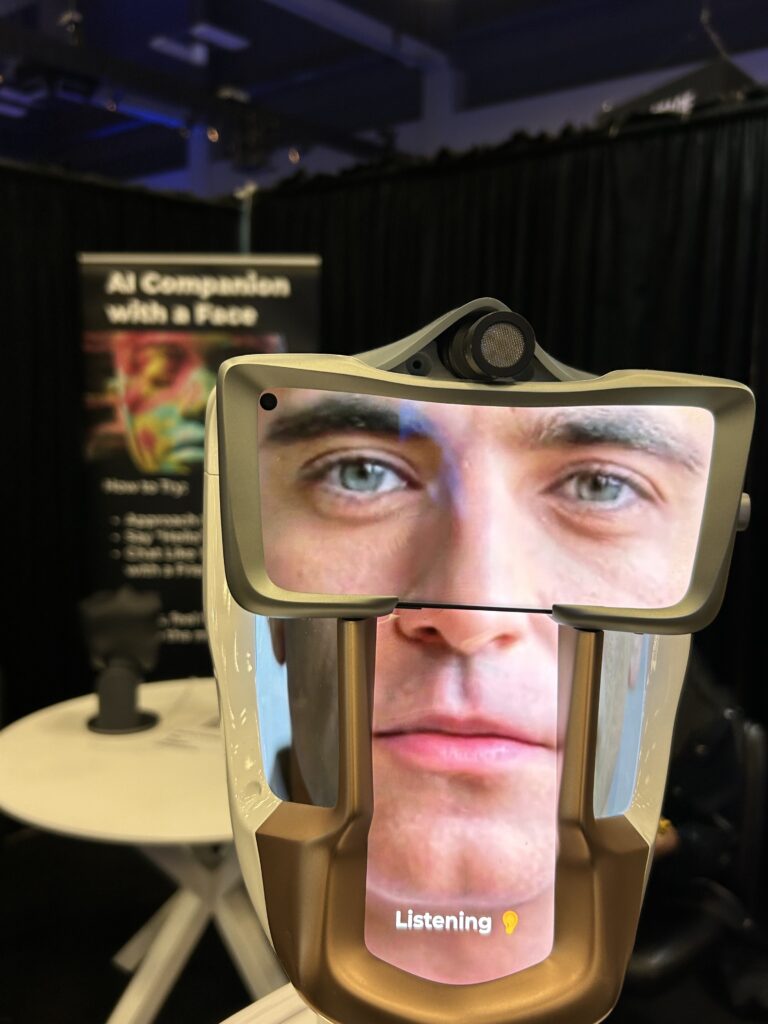
As witnessed at this year’s SXSW conference, there is rapid progress in computer graphics with advances in AI that is now putting humanlike faces on chatbots. This digital humans mimic human communication as they offer a range of services and support.
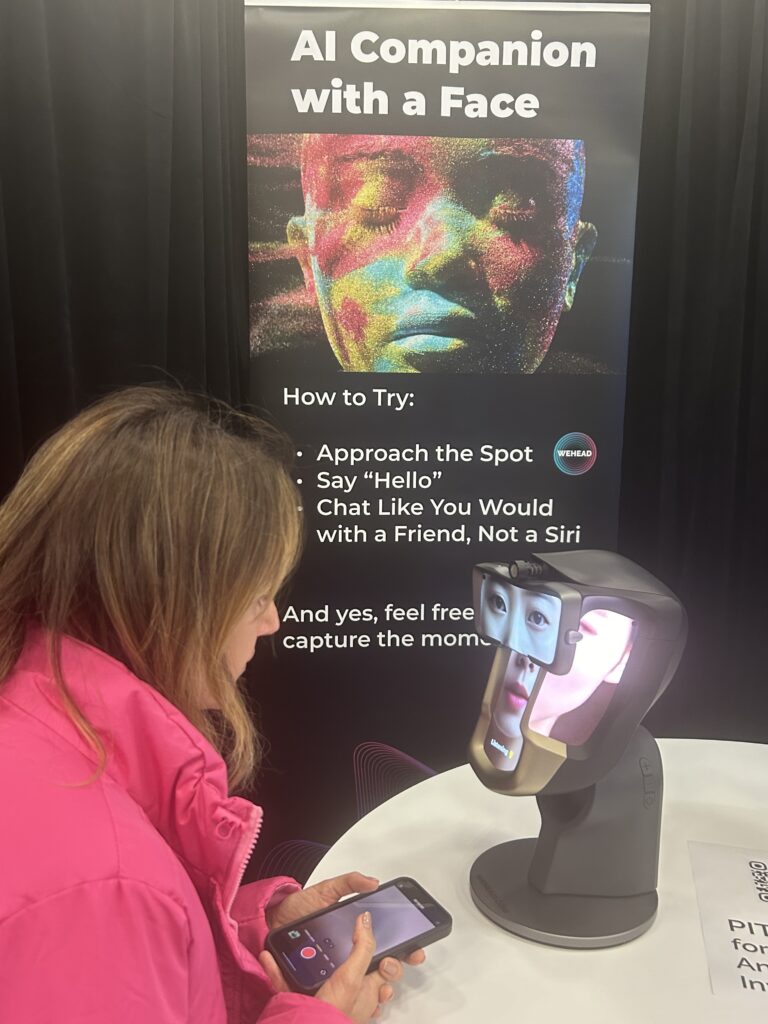
Clearly, the integration of AI into both personal and professional lives is becoming inevitable. However, embracing AI also necessitates a commitment to ethical considerations and continuous learning to harness its potential responsibly.
The article “Leveraging Professional Ethics for Responsible AI” by N. Diakopoulos et al (2024) discusses the importance of integrating professional ethics into the design, development, and evaluation of AI systems, particularly in the domain of journalism.
Now, for journalism, the key to navigating the future lies in striking a balance between leveraging AI’s potential to enhance journalistic writing, practices, and addressing the ethical, regulatory, and societal challenges that come with it.
Regardless of AI’s potential help as discussed, we must recognize that it cannot replace human intellect, so overdependence on it, especially for journalistic work, can be problematic. Rather, it can be a helpful tool that saves journalists time in their news production, yet still requires human intellect and supervision to produce the best product.