
San Francisco — Ghanaian media scholar Alexander Tawiah has achieved a rare academic milestone, winning two of the most prestigious awards in journalism and mass communication research at the 108th annual conference of the Association for Education in Journalism and Mass Communication (AEJMC), held Aug. 6–10, 2025, at the San Francisco Marriott Marquis.
Tawiah received both the National Kappa Tau Alpha Research Award and the James W. Markham First Place Student Paper Award.
The Kappa Tau Alpha Research Award, presented annually by the U.S. national honor society for journalism and mass communication, recognizes the best research paper at the AEJMC conference, honoring work of exceptional scholarly depth, originality, and national significance.
The James W. Markham Award, presented by AEJMC’s International Communication Division, recognizes the best student-authored research paper and commemorates pioneering journalism educator James W. Markham.
This year’s AEJMC conference, themed “Leading in Times of Momentous Change: Individual and Collective Opportunities,” brought together academics, journalists, and students from around the globe for workshops, panels, and research presentations exploring the rapid transformation of digital media and journalism.
In a LinkedIn post reflecting on the honor, Tawiah credited his mentors and peers.
“These awards reflect not only my research but also the mentorship, encouragement, and belief in me from my professors, colleagues, and friends,” he wrote. “I’m extremely fortunate and grateful for the guidance I’ve received.”
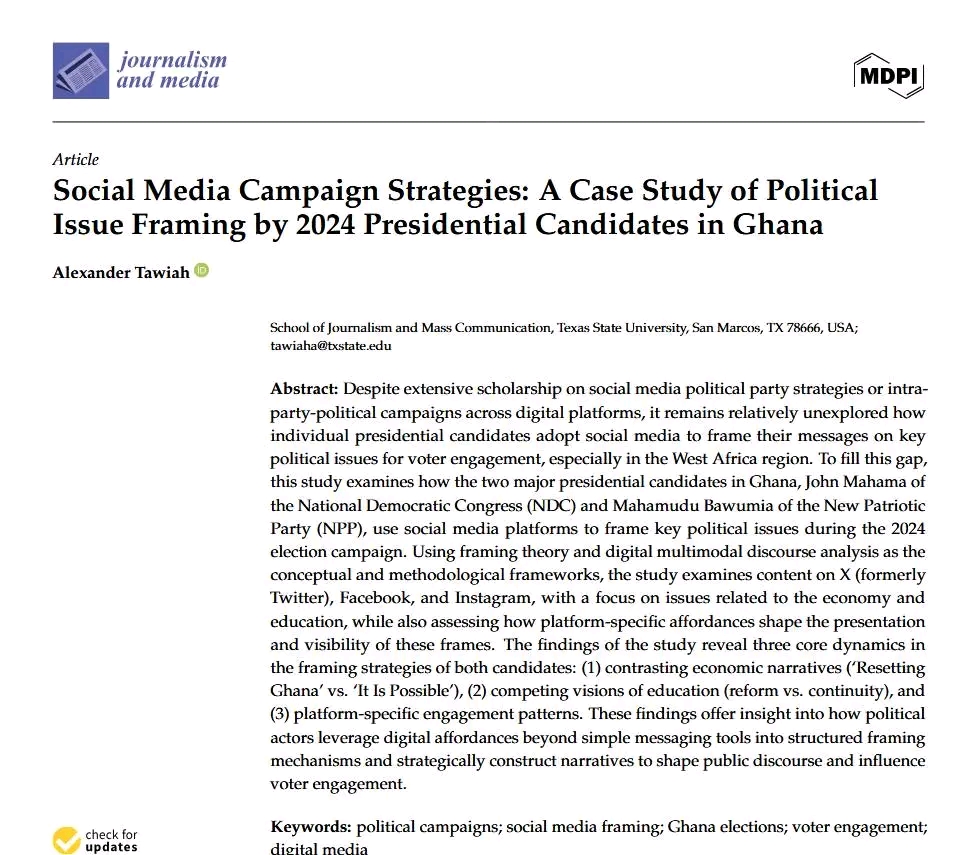
Tawiah’s award-winning paper, “SocialMedia Campaign Strategies: A Case Study of Political Issue Framing by 2024 Presidential Candidates in Ghana,” applied framing theory and digital multimodal discourse analysis to examine how National Democratic Congress candidate John Dramani Mahama and New Patriotic Party candidate Dr. Mahamudu Bawumia framed key national issues during the 2024 election campaign.
The study identified three major findings:
1. Contrasting economic narratives — “Resetting Ghana” (Mahama) vs. “It Is Possible” (Bawumia).
2. Competing education frames — reform-focused messaging vs. continuity-based appeals.
3. Platform-specific engagement strategies — tailored content to maximize the unique strengths of each social media platform.
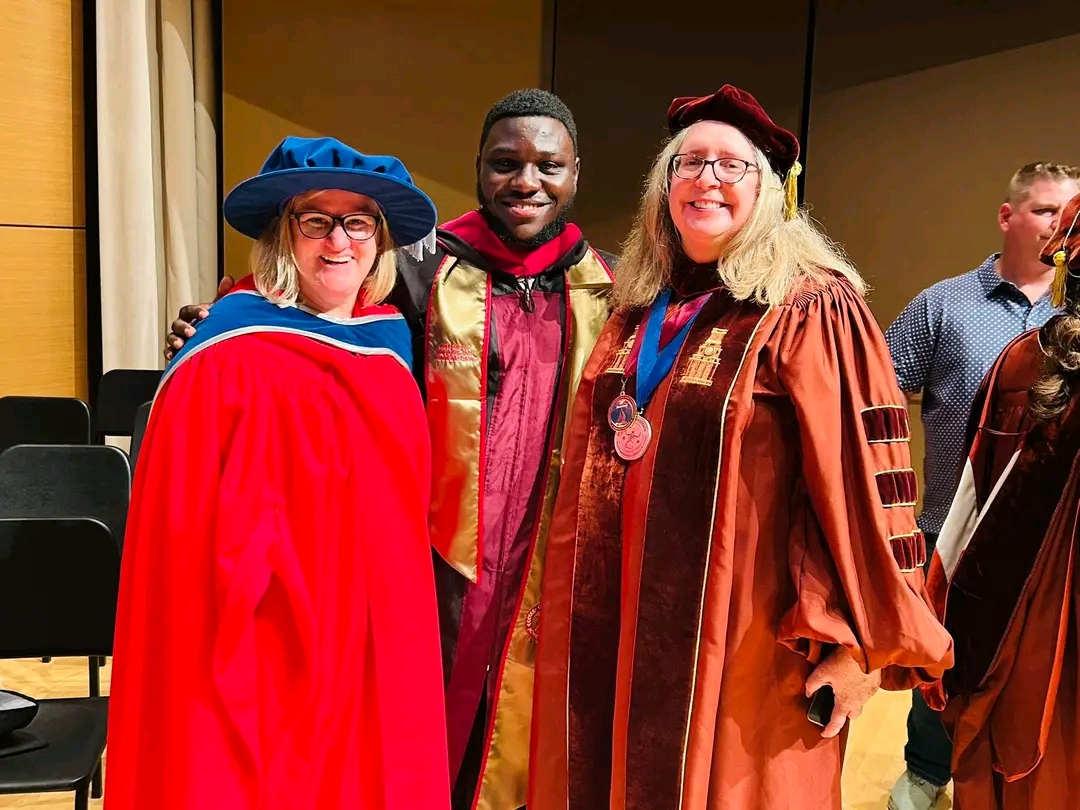
Tawiah’s recognition builds on an impressive academic record. At Texas State University’s School of Journalism and Mass Communication, he became the first international and African student to graduate as the top student in the Master’s Mass Communication program, earning the Outstanding Graduate Student award from the College of Fine Arts and Communication for his service as a student government representative.
Earlier, as an undergraduate at Kwame Nkrumah University of Science and Technology, Tawiah founded Thriller News GH, a student-run digital media outlet that trains aspiring journalists. His leadership there earned him Student Entrepreneur of the Year, Best Student Blogger and Writer, and Best Student Media House awards.
With these recent achievements, Tawiah has cemented his place among the most promising emerging scholars in global media and communication research.
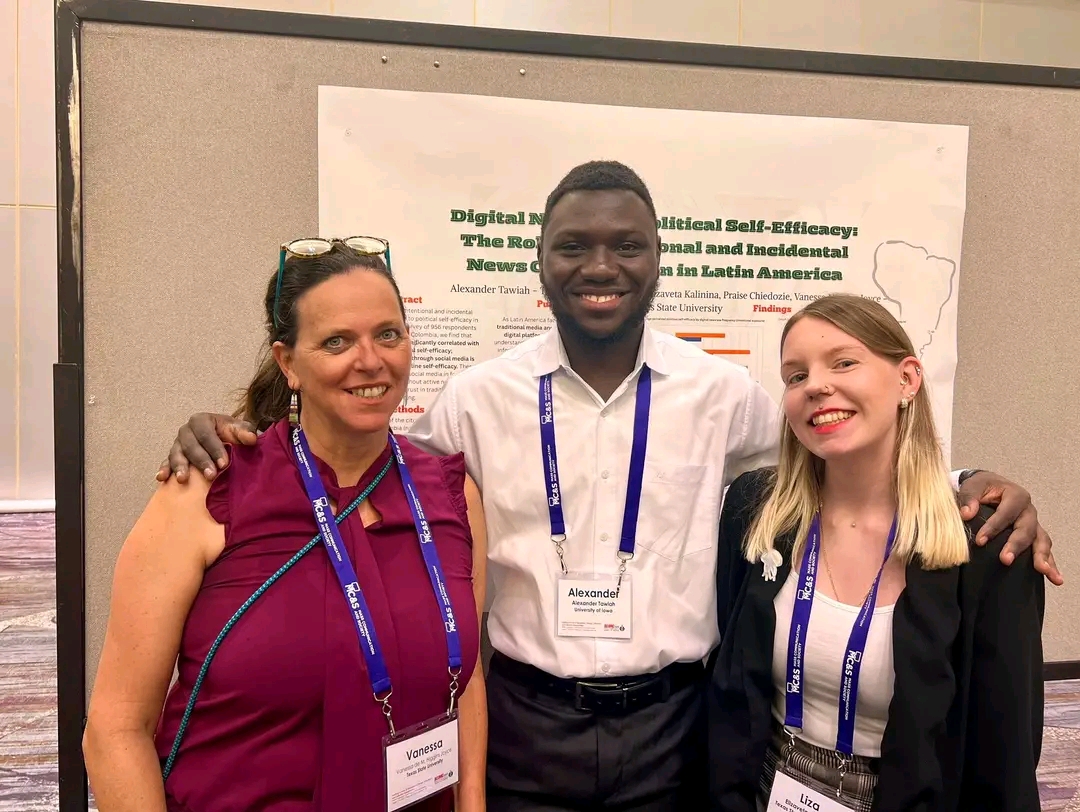
During the conference, several of Tawiah’s mentors celebrated his achievement.
“We are proud of you, Alexander! Now, go get that Ph.D.! I can’t wait to see what you’ll do in Iowa,” said Dr. Vanessa de Macedo Higgins Joyce, graduate advisor at Texas State University.
“Congratulations, Alexander. You are already distinguishing yourself as a skilled teacher and scholar, and it’s only the beginning,” said Dr. Cindy Royal, director of the Digital Media Innovation Lab at Texas State University.
“Amazing, especially as a master’s student. Congratulations!” added the program coordinator for the electronic media program at Texas State University.
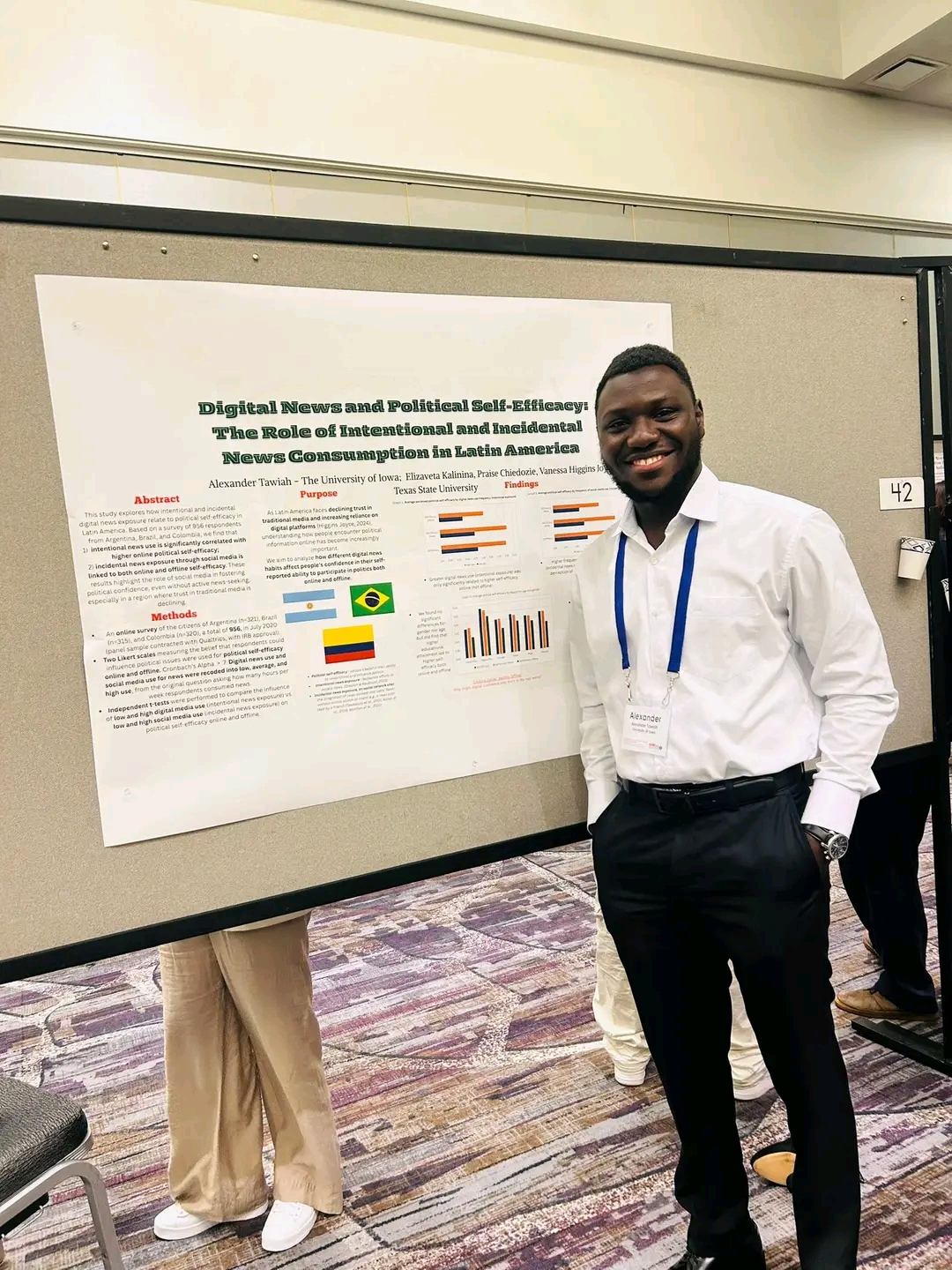
Reflecting on his own experience at AEJMC 2025, Tawiah said that engaging with scholars and professionals from around the globe “reaffirmed my commitment to research and teaching that connect academic inquiry with the real-world challenges facing media today.”
Following his graduation from Texas State University, Tawiah accepted a fully funded Ph.D. position in Journalism and Mass Communication at the University of Iowa—one of five competitive offers he received from leading U.S. institutions this year.
With two national awards in hand and his doctoral journey now underway, Tawiah’s trajectory reflects the growing influence of African scholars in shaping global media research and education.
The AEJMC conference was held alongside the 7th World Journalism Education Congress (WJEC) under the theme “Is It Time to Reboot Journalism Education?”—a timely question amid the rapid technological and societal shifts redefining the media landscape.