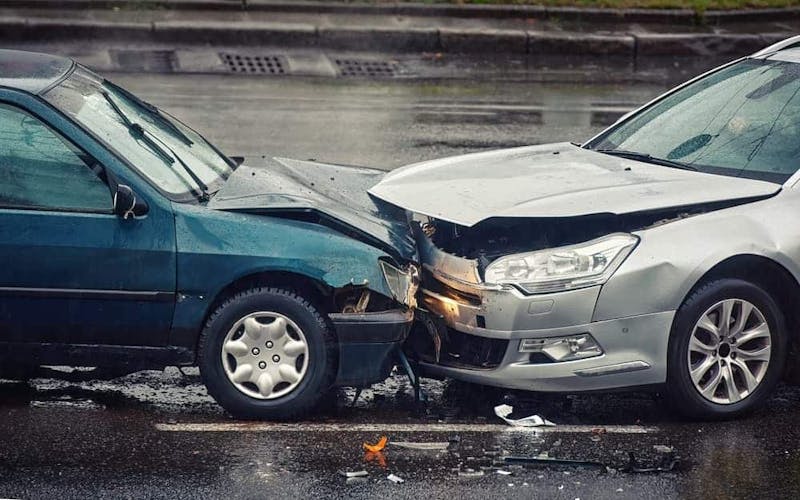
Over a decade, Ghana’s roads have told the same tragic story, one written not in policy documents, but in funerals. Year after year, national road safety data has recorded thousands of crashes and thousands of deaths, with no meaningful downward break in the trend.
Annual road fatalities have remained persistently high, underscoring a systemic failure rather than isolated lapses. The most recent figures bring the crisis into sharp focus: 2,949 people were killed in 14,743 road crashes in 2025 alone, according to provisional data from the National Road Safety Authority. That number represents not just a spike over the previous year, but the continuation of a deadly pattern Ghana has been unable to arrest.
As a transportation expert based in the United States, where safety outcomes are closely tied to regulation, data, and technology, these figures are alarming but not surprising. In transport systems where driver hours are loosely defined, monitoring is minimal, and accountability is fragmented, fatalities remain stubbornly high. Ghana’s experience fits this pattern precisely. Rising transport fares, growing commuter frustration, and now escalating road deaths are not separate crises. They are the visible consequences of a transport sector that is structurally informal, weakly regulated, and technologically underdeveloped.
What makes the 2025 figures especially disturbing is not just the number of lives lost, but what they reveal about how transport is actually being managed on the ground. Behind many of these crashes are familiar factors: speeding, overloading, poor vehicle condition, night driving, and, critically, driver fatigue. Yet fatigue remains one of the least examined and least regulated risks in Ghana’s commercial transport system.
This raises a fundamental question: what limits, if any, exist on how long commercial drivers are allowed to drive?
In well-regulated transport systems, drivers operate under strict Hours-of-Service (HOS) rules designed to prevent exhaustion. These rules cap daily and weekly driving time and mandate rest periods because fatigue impairs judgment as severely as alcohol. In Ghana, however, it is common to see drivers operating from early morning until late at night, sometimes across multiple long distance trips, with minimal rest.
How many of the nearly 3,000 deaths in 2025 involved drivers who were simply too tired to be behind the wheel?
An even more troubling question follows: how are driver hours verified at all?
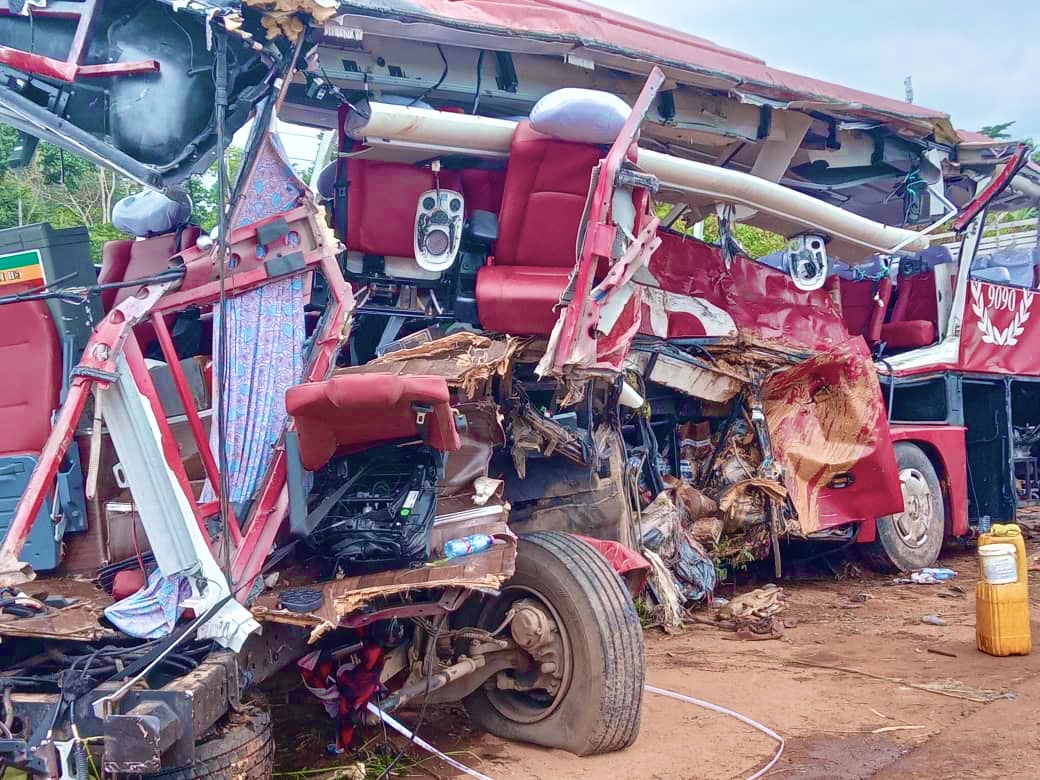
In the United States and other advanced transport markets, commercial drivers are monitored using Electronic Logging Devices (ELDs) or similar digital systems that automatically record driving time, rest breaks, speed, and vehicle movement. These systems eliminate guesswork and false reporting. A driver cannot claim rest when the data shows continuous motion. In Ghana, by contrast, most commercial vehicles operate with no electronic logs, no verified driving-hour records, and no independent monitoring. If a driver has been on the road for 14 or 16 hours straight, there is often no data trail to prove it, or to stop it.
This leads to a third, equally critical issue: are transport owners deploying any technology at all to monitor driver behavior on routes?
Do fleet owners track speed, harsh braking, dangerous overtaking, or night-time driving? Are vehicles equipped with GPS, telematics, or fatigue-alert systems? In most cases, the answer is no. Vehicles are handed over, daily sales targets are set, and drivers are left to manage risk on their own. When crashes occur, blame is placed squarely on the driver, even though the system itself incentivizes rushing, overwork, and unsafe decisions.
The absence of monitoring technology is not accidental; it reflects the informal structure of transport ownership. Many operators focus on daily cash returns and resist systems that impose discipline or transparency. Yet the cost of this informality is now unmistakable. Over four years, thousands of lives have been lost on Ghana’s roads, and the trend shows no sign of reversing under the current model.
The tragedy is that this crisis is entirely preventable. The solutions are well known in global transport practice and are already saving lives elsewhere.
First, Ghana must adopt and enforce clear national Hours-of-Service standards for commercial drivers, defining maximum daily driving hours, mandatory rest periods, and weekly limits. Fatigue must be treated with the same seriousness as drunk or reckless driving.
Second, technology must become mandatory, not optional. Commercial vehicles, starting with buses and long-distance operators, should be required to install GPS-based monitoring and, over time, Electronic Logging Devices or locally adapted equivalents. These tools provide objective data on driver hours, speed, and behavior. Data does not argue; it protects lives.
Third, accountability must extend beyond the driver to transport owners and fleet managers. When a fatigued driver causes a fatal crash, investigators must ask whether the owner enforced rest periods, monitored hours, or imposed unrealistic revenue targets. Without owner responsibility, unsafe practices will persist.
Fourth, road safety institutions must move from reactive enforcement to data-driven prevention. Crash statistics should be used to identify fatigue-prone corridors, high-risk night routes, and dangerous operating patterns. Technology makes targeted intervention possible; informality makes it impossible.
Finally, Ghana must begin treating transportation as a system, not a collection of individual vehicles. Fare instability, driver exhaustion, reckless competition, and rising fatalities all stem from the same regulatory vacuum. A modern economy cannot rely on guesswork and goodwill to move millions of people safely.
The nearly 3,000 deaths recorded in 2025, and the thousands more over the preceding years, are not just statistics. They are evidence that the current approach is failing. Ghana must now decide whether transportation will remain an informal hustle driven by fatigue and risk, or evolve into a professionally regulated sector grounded in data, accountability, and safety.
Lives depend on that decision.
Source: Sanusi Zankawah (PhD)
Economist and Transportation Expert (USA)